01
Oven Mode
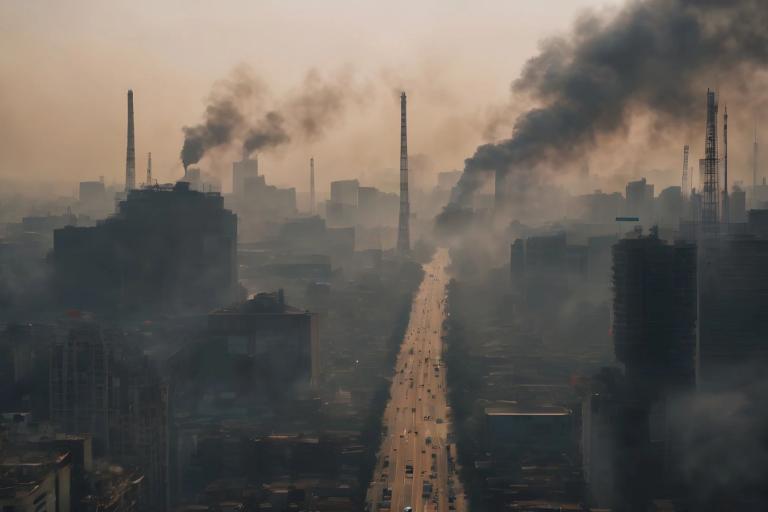
Global warming
47%
+2 pts
The planet turns up the heat. Humanity buys fans.
The end of the world, now with a progress bar.
Humanity is still in “it’ll probably be fine” mode.
Global warming
The planet turns up the heat. Humanity buys fans.
Nuclear and geopolitical escalation
Huge egos. Tiny buttons. An unnecessary combination.
Pandemics and biosecurity
Apparently one global season was not enough to learn the script.
Artificial intelligence out of control
Whether it will destroy humanity is unknown, but it already writes better emails.
Ecological collapse and biodiversity
Nature had been sending signals for years. Nobody opened the chat.
October 24, 2026 – October 30, 2026. Changes accumulated since the previous edition. View edition 005 ↗
 OMM / Canva · imagen de la publicación, 27 oct 2026
WMO releases its 2025 assessment: CO₂ reached 426.8 parts per million, with methane and nitrous oxide also at record levels. The annual CO₂ increase was smaller than the previous one but exceeded the last decade’s average.
+1 for a new global measurement confirming a greater accumulation of heat-trapping gases. These are 2025 concentrations published this week, not emissions or a temperature jump over these days. Slower growth limits the movement. The El Niño forecast and emissions-report pathways are not scored again.
Read the full report ↗ EFE / Gustavo Amador · fotografía de archivo
The new Lancet Countdown estimates 710,000 heat-related deaths in 2023, with more than 70% attributable to climate change. The global assessment finds harms outpacing the response, while acknowledging benefits from clean energy and prevention.
+1 for a new global health assessment estimating mortality and harms already recorded. The figure covers 2023, not deaths this week. This is distinct from atmospheric concentrations and the assessment of Europe’s summer; no pandemic points are added for it. The call for an emergency declaration is not a formal WHO declaration.
Read the full report ↗ Todd Brown / PNUMA · Barranquilla, fotografía de archivo
UNEP, FAO and CBD present their first global stocktake: 252 million hectares across 149 countries are under restoration. It documents work underway and local recoveries, but warns that the pace and funding remain far short of what is needed by 2030.
−1 for restoration actions implemented and local recoveries documented in a new global assessment. The 252 million hectares are works in progress: they are not treated as already recovered or restored this week. The improvement is limited, with gaps especially in freshwater and oceans. Funding pledges and summit agreements do not earn a reduction.
Read the full report ↗